 Save It
 One winter afternoon, I was scrolling through my phone when a coworker mentioned how her grandmother spent entire days hunched over a steaming pot of ramen broth. That got me thinking—what if I could capture that same deep, savory magic without the fuss? I threw a beef chuck roast into my slow cooker with soy sauce and ginger, set it and forgot about it, and hours later my kitchen smelled like a Tokyo back-alley noodle shop. That was the moment I realized slow cooker ramen could feel just as intentional and rewarding as the traditional kind, minus the constant stirring.
I made this for my sister on a rainy Saturday when she was going through a rough patch, and I watched her take that first slurp and just close her eyes. She didn't say anything for a full minute, just sat there with her spoon halfway to her mouth. That's when I knew this recipe wasn't just about feeding people—it was about giving them a moment to breathe and feel taken care of.
Ingredients
- Beef chuck roast, 1.5 pounds cut into chunks: Chuck is the workhorse cut that gets more tender the longer it cooks, not stringy or dry like leaner cuts would be.
- Salt and freshly ground black pepper, to taste: Don't skip the seasoning step on the beef itself—it builds the foundation for everything that comes next.
- Onion, 1 thinly sliced: The onion melts into the broth and becomes almost invisible, but its sweetness balances all that salt and umami.
- Garlic, 4 cloves minced: Mince it finely so it distributes evenly and doesn't clump up in the broth.
- Fresh ginger, 1 tablespoon grated: Grate it on a microplane for maximum flavor punch and to avoid fibrous chunks.
- Beef broth, 4 cups low-sodium recommended: Low-sodium gives you control over the final salt level since soy sauce brings plenty of its own.
- Water, 3 cups: This dilutes the broth just enough so it's sippable, not intense.
- Soy sauce, 1/4 cup low-sodium if preferred: This is the soul of the dish—it brings that savory restaurant-quality depth you can't fake.
- Sesame oil, 2 tablespoons: Drizzle this in gently because a little goes a long way; it's the whisper of nuttiness that ties everything together.
- Brown sugar, 2 tablespoons: Just a touch of sweetness to round out the sharp edges of the soy and sesame.
- Fresh ramen noodles, 2 packs about 7–8 oz total: Fresh noodles have a better texture than dried, but dried works fine if that's what you have on hand.
- Baby spinach, 1 cup: Spinach wilts in seconds and adds a gentle earthiness without overpowering the broth.
- Green onions, 2 sliced: The brightness of green onions cuts through the richness and adds a little textural contrast.
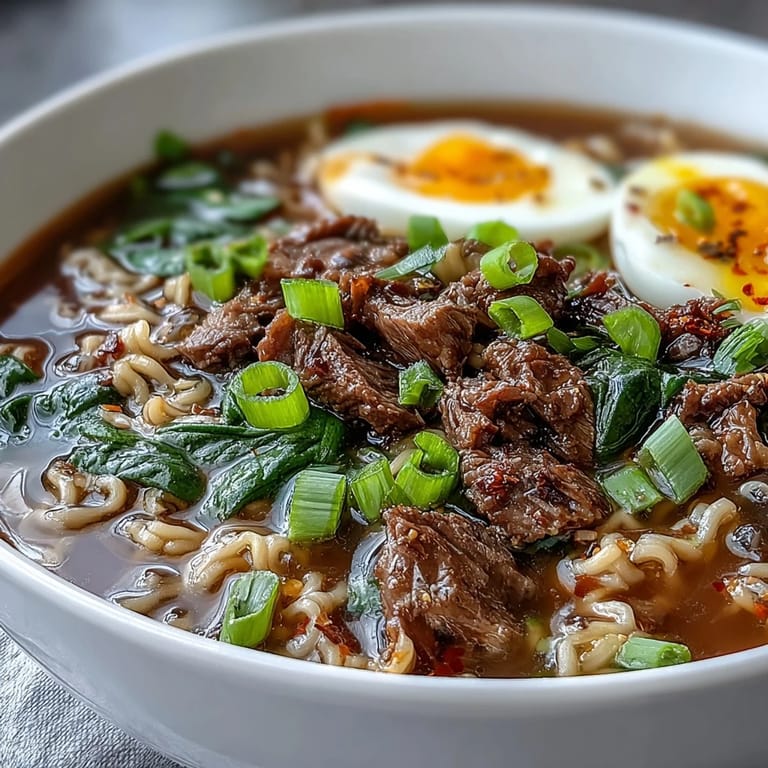
- Soft-boiled eggs, 1 per serving optional: A soft-boiled egg transforms the whole bowl into something restaurant-worthy—the yolk becomes this luscious sauce.
- Sriracha or chili oil, to taste optional: Not everyone wants heat, so let people add their own kick at the table.
Tired of Takeout? 🥡
Get 10 meals you can make faster than delivery arrives. Seriously.
One email. No spam. Unsubscribe anytime.
Instructions
- Season your beef generously:
- Pat those chunks dry and hit them with salt and pepper on all sides—don't be shy, it's what makes the broth taste like something special.
- Layer everything in the slow cooker:
- Start with the beef, then scatter the onion, garlic, and ginger on top so the aromatics nestle right in with the meat.
- Pour in the broth mixture:
- Combine the beef broth, water, soy sauce, sesame oil, and brown sugar in a bowl first so the sugar dissolves evenly, then pour it all over gently.
- Let it cook low and slow:
- Cover and set it to low for 8 hours or high for 4 hours—your kitchen will smell incredible the whole time.
- Cook your noodles separately:
- About 10 minutes before you're ready to eat, get a pot of water boiling and cook the ramen according to package directions, then drain them well.
- Shred the beef gently:
- Two forks work perfectly for pulling the beef apart right in the slow cooker—it should fall apart without much resistance if it's cooked through.
- Wilt the spinach quickly:
- Stir in the spinach and let it soften for just 2–3 minutes so it stays vibrant green, not grayish.
- Build your bowls thoughtfully:
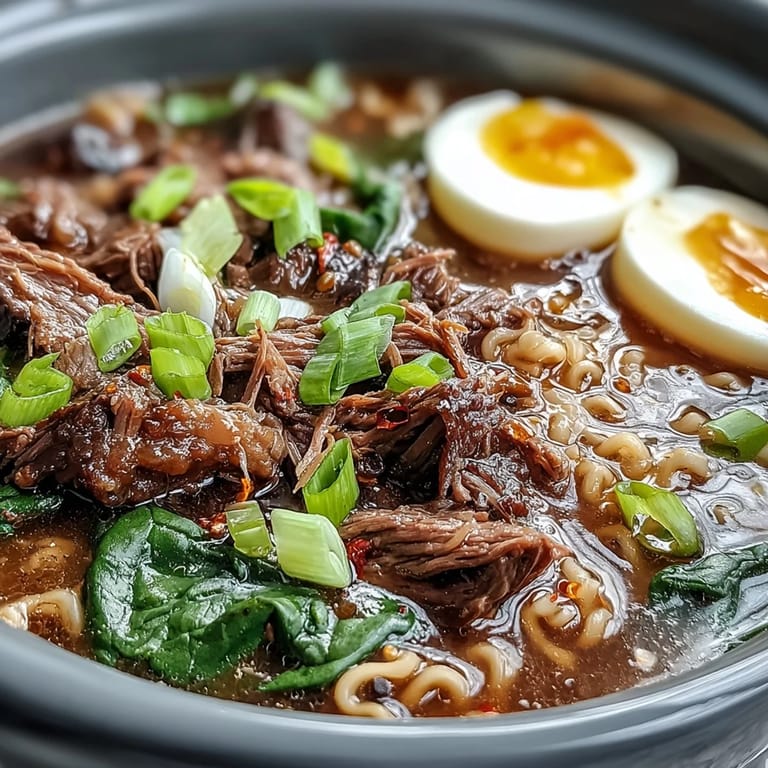
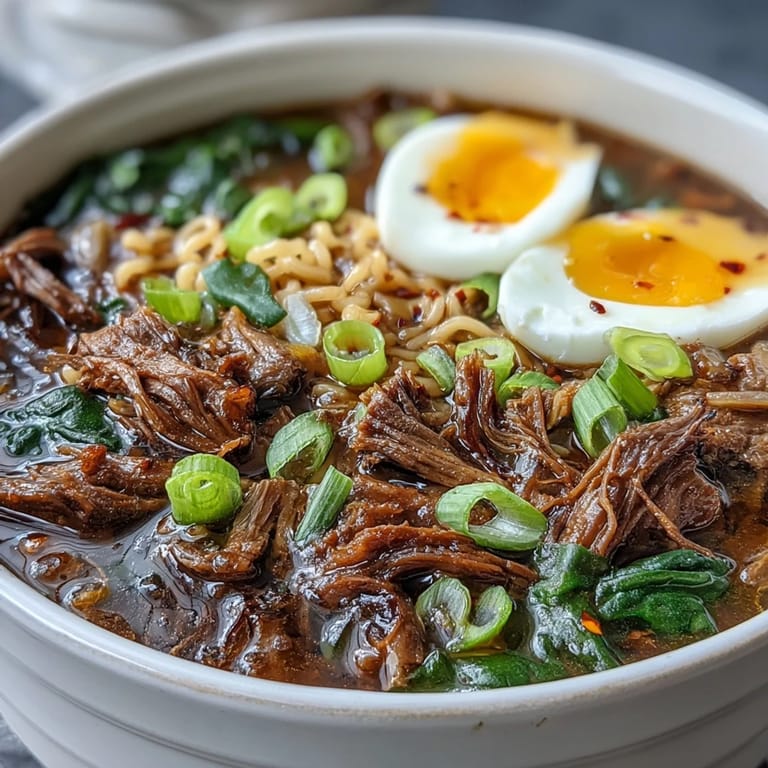
- Divide the cooked noodles between bowls first, then ladle the hot broth and shredded beef over the top so the noodles get coated.
- Garnish like you mean it:
- Top with green onions, a halved soft-boiled egg if you're using one, and a drizzle of sriracha or chili oil for anyone who wants heat.
 Save It
 There's this quiet moment right when the first person at the table takes that first spoonful and the kitchen goes completely silent. That pause before they look up and say something like this is exactly what I needed today—that's when you know you've made something that matters more than just feeding someone.
The Secret to Restaurant-Quality Flavor
The trick is that combination of soy sauce, sesame oil, and brown sugar working together—none of them overshadow each other, they just dance around until the broth tastes like it came from somewhere with a long tradition of making noodle soup. The sesame oil is the part people never expect but always taste; it brings this warm, toasted quality that makes the broth feel complete. Don't substitute it with regular vegetable oil; the flavor difference is the difference between a good bowl and a memorable one.
Making It Your Own
This recipe is sturdy enough to handle your experiments without falling apart. I've added mushrooms and gotten this earthy depth, thrown in corn for sweetness, swapped spinach for bok choy when I wanted something with more texture. The core broth is so solid that whatever vegetables you add will taste right at home in there. The beauty is that you're not locked into doing it exactly one way—your version can be as personal as your taste buds want it to be.
Timing and Flexibility
I've made this on mornings when I knew I'd be gone all day, and I've also made it on a high setting when I was genuinely hungry after just 4 hours and it turned out perfectly both times. The beef gets so tender that it doesn't matter if you're a few minutes off—it only gets softer. The wild card is cooking the noodles separately and keeping them out of the broth until serving, which sounds fussy but honestly takes like two minutes and keeps everything at the perfect texture instead of turning into mush.
- You can sear the beef chunks in a hot skillet for 3–4 minutes per side before slow cooking if you want even deeper, browned flavor.
- Swap out regular spinach for bok choy, napa cabbage, or even mushrooms without changing anything else about the recipe.
- Make it gluten-free by using tamari instead of soy sauce and checking that your noodles and any other packaged ingredients are certified gluten-free.
 Save It
 This is the kind of recipe that keeps working for you no matter when you make it or what you're going through that day. It's comforting without being heavy, fancy enough to impress people but simple enough that you don't stress while making it.
Recipe FAQs
- → Can I use different cuts of beef?
Beef chuck roast works best for long cooking, becoming tender and shreddable. Brisket or short ribs are excellent alternatives with similar marbling. Avoid lean cuts like sirloin as they may become tough during extended cooking.
- → How do I prevent noodles from getting mushy?
Cook ramen noodles separately according to package directions, then drain and add to individual bowls when serving. This prevents them from absorbing too much broth and becoming overly soft during the extended cooking time.
- → Can I make this gluten-free?
Substitute tamari for soy sauce and use gluten-free ramen or rice noodles. Verify all ingredients, especially broth and condiments, are certified gluten-free to accommodate dietary restrictions safely.
- → What vegetables can I add?
Bok choy, napa cabbage, mushrooms, carrots, corn, or snow peas work beautifully. Add hearty vegetables like carrots during cooking, but stir in delicate greens like spinach or bok choy during the last few minutes.
- → Can I cook this on high heat faster?
Yes, cook on high for approximately 4 hours instead of 8 hours on low. The beef should be fork-tender and easily shred with two forks. The longer cooking time on low typically yields more tender, flavorful results.
- → How long do leftovers keep?
Store broth and beef separately from noodles for up to 4 days in the refrigerator. Reheat gently on the stove, adding fresh broth if needed. Cooked noodles should be eaten within 2-3 days for best texture.