 Save It
 I discovered these almond flour sugar cookie bars on a quiet Sunday afternoon when my sister mentioned she'd gone gluten-free, and I found myself standing in the kitchen wondering what I could actually make her that wouldn't taste like cardboard. The first batch came out unexpectedly soft and chewy, nothing like the dense, crumbly attempts I'd tried before. Turns out, the secret was letting go of traditional flour entirely and leaning into what almond flour actually wanted to be. Now they're my go-to when I need something that feels indulgent but doesn't derail anyone's dietary choices.
I'll never forget bringing a batch to my book club meeting, mostly because I was nervous about serving something "diet-friendly" to people who honestly just wanted dessert. The moment someone took a bite and stopped mid-sentence, I knew I'd nailed it. They asked for the recipe three separate times that night, which meant more to me than any compliment about the book we were supposed to discuss.
Ingredients
- Almond flour: The foundation here, and organic makes a noticeable difference in flavor—it's nuttier and less powdery than conventional options.
- Monk fruit sweetener: Doesn't spike blood sugar and has virtually zero aftertaste if you use a quality brand, which I learned after a few bitter experiments.
- Baking powder: This is what gives you that gentle lift and cloud-like texture instead of a dense brick.
- Coconut oil and Greek yogurt: Together they create moisture and a tender crumb without needing butter or excess fat.
- Eggs and vanilla extract: The binders that hold everything together and add that cookie-shop warmth.
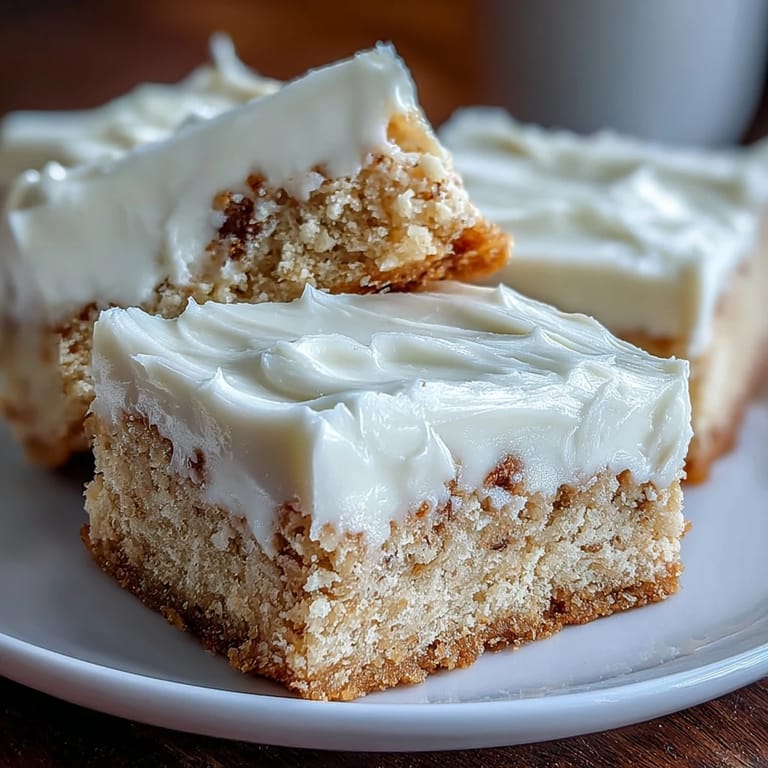
- Cream cheese frosting: This is where the magic happens—tangy, rich, and it stays smooth if you add almond milk slowly and taste as you go.
Tired of Takeout? 🥡
Get 10 meals you can make faster than delivery arrives. Seriously.
One email. No spam. Unsubscribe anytime.
Instructions
- Set up your workspace:
- Preheat to 325°F and line your 8x8 pan with parchment paper, letting it hang over the edges so you can lift the whole thing out later without wrestling it. This small step saves frustration and preserves those perfect corners.
- Combine your dry base:
- Whisk together almond flour, monk fruit, baking powder, salt, and protein powder if you're using it. You want everything evenly distributed so there are no pockets of sweetener or baking powder that'll surprise you mid-bite.
- Mix in the wet ingredients:
- Add eggs, softened coconut oil, Greek yogurt, and vanilla, then fold everything together until you have a thick, smooth batter. Don't overmix—just until you don't see streaks of dry flour anymore.
- Spread and bake:
- Pour the batter into your prepared pan and smooth it out evenly with a spatula. Bake for 20 to 25 minutes until the center looks slightly puffed and the edges are golden brown—this is when you'll smell that warm cookie aroma that makes the whole house feel like home.
- Cool completely:
- Let the bars sit in the pan until they're room temperature, which takes patience but prevents the frosting from melting into pools. This is a good time to make your frosting.
- Prepare the frosting:
- Beat softened cream cheese with protein powder if using, vanilla extract, and add almond milk one teaspoon at a time until you reach a spreadable consistency. Taste and sweeten with monk fruit to your preference—monk fruit's sweetness varies by brand, so trust your palate.
- Frost and chill:
- Spread frosting evenly over the completely cooled bars, then refrigerate for at least 30 minutes. This sets everything up for clean, picture-worthy slices.
- Slice and serve:
- Cut into 16 squares using a sharp knife dipped in hot water and wiped clean between cuts. Serve cold or let them come to room temperature, depending on how much you love that frosting contrast.
 Save It
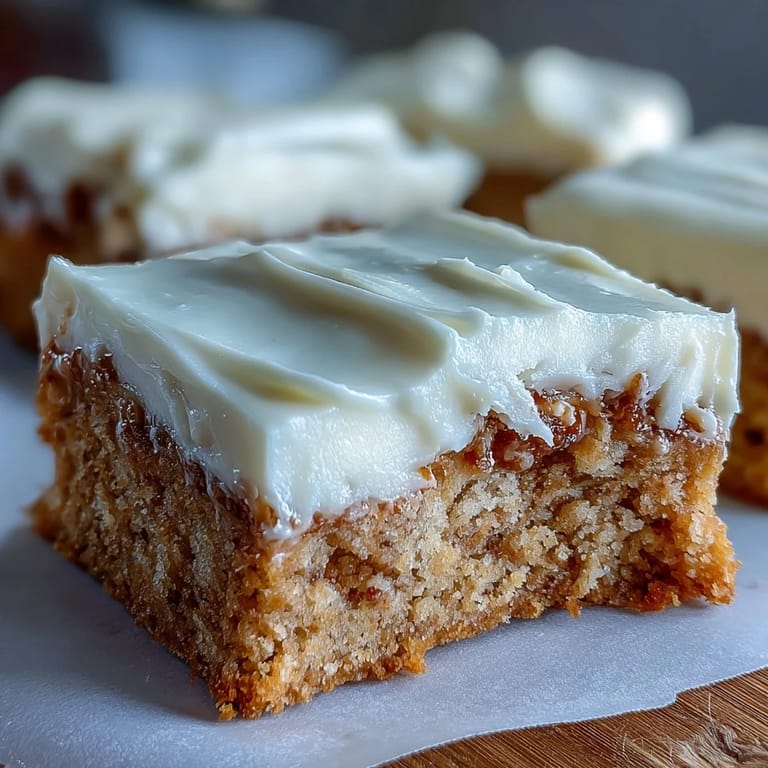
 These bars became my secret weapon for proving that eating well doesn't mean eating boring things. They showed up at potlucks, in office break rooms, and eventually became the thing people actually hoped I'd bring instead of just being polite about it.
The Almond Flour Advantage
Almond flour isn't just a gluten-free swap—it's a completely different ingredient that happens to work beautifully here. It adds a subtle nuttiness and moisture that regular flour would never deliver, plus it's packed with protein and healthy fats that make these bars feel substantial rather than sad. I stopped thinking of it as a substitution once I realized the bars actually tasted better this way, and that shift in perspective changed how I approached baking altogether.
Why These Stay Soft and Chewy
The combination of Greek yogurt and coconut oil creates a texture that feels almost impossible when you first mix it—thick but somehow yielding as it bakes. The lower oven temperature also helps prevent the edges from overcooking while the center sets, which is the whole secret to bars that don't turn into hockey pucks by day two. I've made these at 350°F when I was impatient, and the difference between that and 325°F is the difference between good bars and bars that taste like they were meant to be this way.
Making This Your Own
Once you've made these once, you'll start noticing little ways to make them feel personal. The almond extract addition changes everything if you love that amaretto vibe, and the protein powder doesn't just boost nutrition—it adds a subtle vanilla note that makes the frosting taste less like cream cheese and more like dessert. Some people I know have added a tiny pinch of cardamom or used different extracts, and every version has been delicious in its own way.
- Try adding a quarter teaspoon of almond extract to the batter for a deeper cookie flavor that feels almost like a fancy bakery secret.
- If you want extra nutrition, both the batter and frosting work beautifully with vanilla or chocolate protein powders.
- Store these in an airtight container in the fridge for up to five days, and they actually taste better on day two when the flavors have settled together.
 Save It
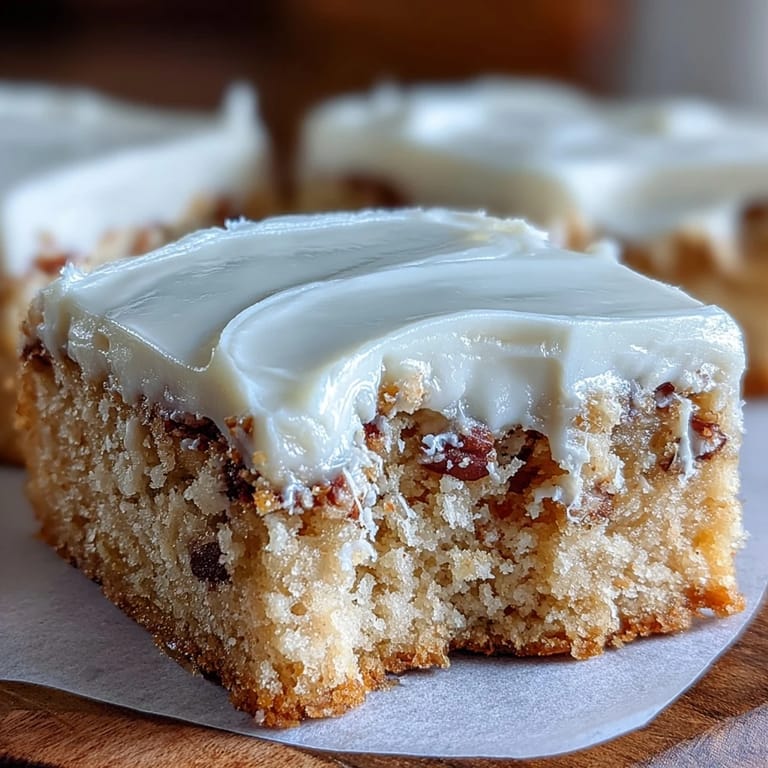
 These bars taught me that the best recipes aren't about restriction or compromise—they're about discovering what actually works and tastes good. Make these, watch people's faces light up, and stop apologizing for desserts that happen to be gluten-free.
Recipe FAQs
- → Can I make these bars dairy-free?
Yes, substitute Greek yogurt with dairy-free yogurt and replace cream cheese with a plant-based cream cheese alternative in the frosting.
- → How should I store these cookie bars?
Store in an airtight container in the refrigerator for up to 5 days. Serve chilled or bring to room temperature before enjoying.
- → Can I omit the protein powder?
Absolutely. The protein powder is optional for a high-protein version—the bars will bake perfectly without it.
- → Why is chilling necessary before slicing?
Chilling for at least 30 minutes allows the frosting to set and the bars to firm, making clean slices easier and improving texture.
- → Can I freeze these almond flour bars?
Yes, freeze individually wrapped bars for up to 3 months. Thaw in the refrigerator overnight before serving.
- → What makes these bars gluten-free?
Almond flour replaces wheat flour entirely, making these naturally gluten-free while maintaining a soft, chewy texture.